By Ciaban C. Peterson • February 2, 2019
In my final year at my undergraduate program I created and developed a competitive Career Business Series (CBS) for Student Veterans at Wichita State University. The WSU PAVE team would go on to refine, collaborate, and successfully present the series to different organizations and also colleges.
With this series, I found that while some Student Veterans and Military Families found value (ultimately leading to follow up questions, etc.), the larger majority did not seemed moved by the series as a whole (initially). Student Veterans preferred individual consultation most of the time. Yet there was quality in providing the mentorship, especially for the student leaders providing the consultation. The CBS focused on 3 major pillars: Advanced tips in Resume building, Optimizing your Professional Digital Online Profile (PDOP), and Capitalizing on network opportunities.
While I felt slightly disappointed that the series did not take off the way I intended it (initially), I did find an amazing value with another demographic: My fellow non-Veteran peers or rather, Business Students. While there were fledgling programs starting to bring insight to Business Students at my University, I found that the leadership traits and principles embedded into the series was taken as a breath of fresh air to peers in Business. Even now, as I am currently recruiting with companies in the Bay area (California) I have come to find that there is a large deficit of leadership skills/traits that is missing from even the ‘tech mecca’ of the US.
Take a look at the below graphs illustrating how the skills match up below
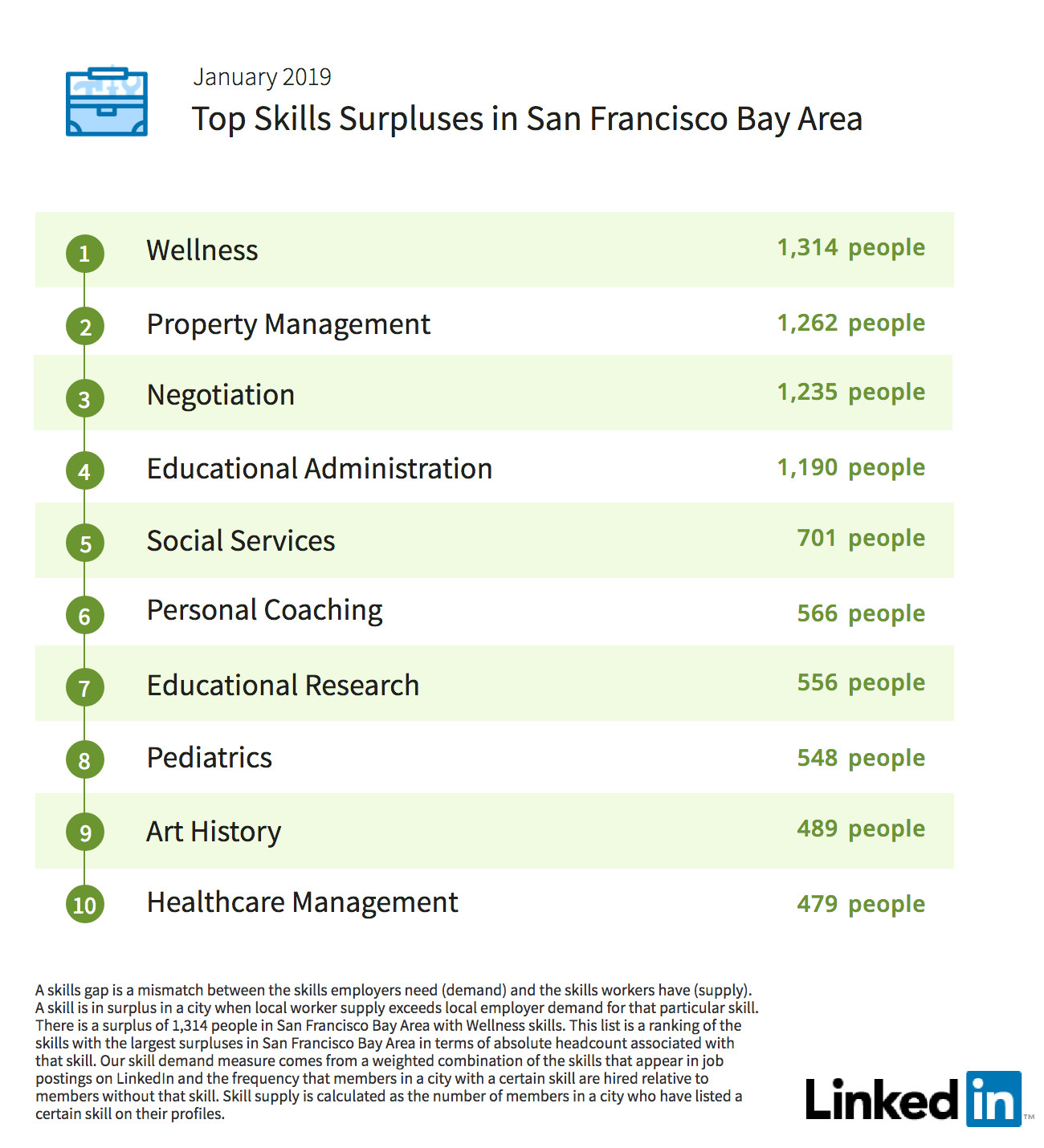
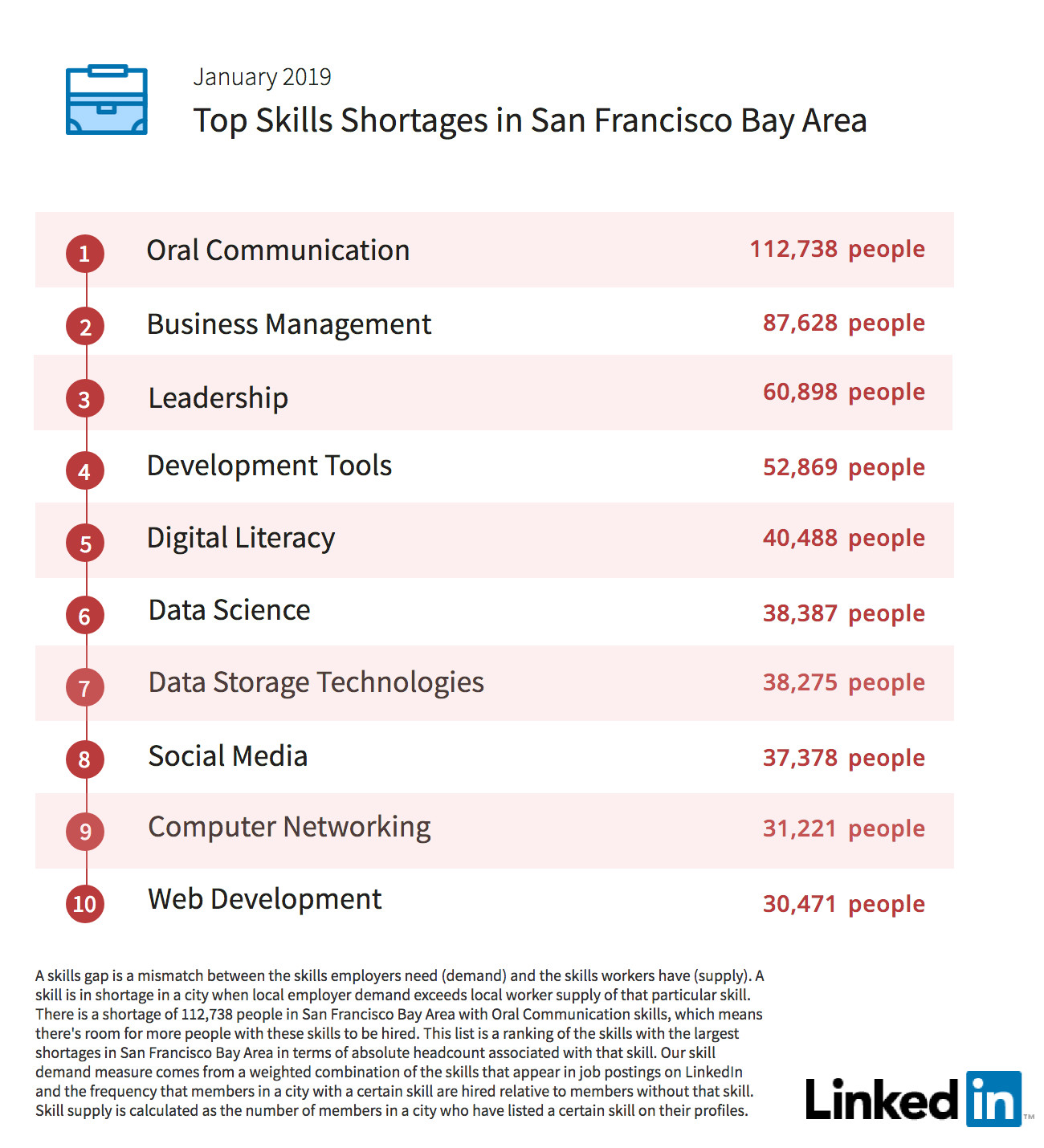
Why is this data important? This data provides even more evidence that Student Veteran Leadership is critical to diversity to Universities around the world. Leadership is at a deficit in the United States. While there are programs that help with making one competitive in the workplace/career, Student Veterans impact on peers is undeniable. My biggest takeaway from this knowledge is this: Get Involved, Stay involved, Create Involvement.
College Students: Handshake Or LinkedIn?
Disclaimer: There is very little to no competition utilizing in person resources and especially career fairs at your University or organizations on campus as an outlet to get the interview. This data is strictly for those continuing to positively disrupt themselves. I am not paid by either Handshake nor LinkedIn.
Now for the litmus test as a recent college graduate.
For those who do not know what Handshake or LinkedIn are, the fast summary is that they are both a digital online networking profile tool. Handshake is looking to disrupt the market in higher education job searching, and therefore can be more competitive than LinkedIn for College Students.
As your digital mentor, I suggest you use both. However, as I have been actively recruiting in the area, I have found many more positive responses as a recent graduate using Handshake. LinkedIn has been my tool to network with potential employers and especially their HR team. I will start recording my data to add to my CSB, and so with this new information here are my main tips for Handshake:
- Fill in your profile in its entirety.
- Handshake can import information from LinkedIn, however, I suggest you take a moment to be meticulous about filling out your profile. Employers and recruiters will scan your profile and preferences and reach out to you. The best way to update any PDOP is to keep a safe digital journal that you update monthly with your successes and failures. This tool can keep all of your progress fresh. I use Microsoft OneNote as my tool.
- While you are at it, be sure to make your LinkedIn Profile as up to date as possible as well.
- Do not just “cold call” recruiters.
- Handshake (and even LinkedIn) have options to view who created the job opening. Be sure to reach out to those representatives to let them know of your interest, or for the brave and next level leaders: also send them your resume and a cover letter. This can be a big leg up against the competition.
- Follow up.
- Be sure to follow up on recruiters who message you. You can download the Handshake Application from Google Play (Android) or the App Store (iPhone). This is a handy tool to ensure you do not miss any messages or notifications. The faster your reply, the better your chances.
- Be weary of companies job postings.
- If the opportunity sounds too good to be true, be sure to research the company before sending your information or applying. Even now as I have researched and audited some Handshake opportunities, there are some questionable postings. The main thing to take away here is that you should always research a company to determine if they are right for you.
In Conclusion
There are a lot of tools and resources available for Students now on campuses around the country. My experience in the past at my University was that many students were still missing out on advanced leadership skills and tactics that may not be found in certain resources. The Marine Corps is the premier school of leadership and thus I was able to leverage my own experience for programs I created on campus, as well as bring value to my peers. Other military branches would have similar stories. The biggest takeaway I have for all resources, is that the students to your left and right can have amazing ideas and bring value to you. Even as a Student Veteran, we can get blinded by just hanging out with our peers. The more we subject ourselves to diversity, the stronger we grow as a whole. For Non-Student Veterans reading, consider joining your local Student Veterans organization. I have met many allies in my journey that have brought amazing value to the organization and myself.
Until next time!
Bonus Resources for those who got to the end:
Student Veterans of America Resources
LinkedIn Article detailing the Tech Deficit
The importance of Diversity – Forbes
 Agile Veteran Consulting